
Learning from Destiny
May we continue to honor your legacy and lead with the dance

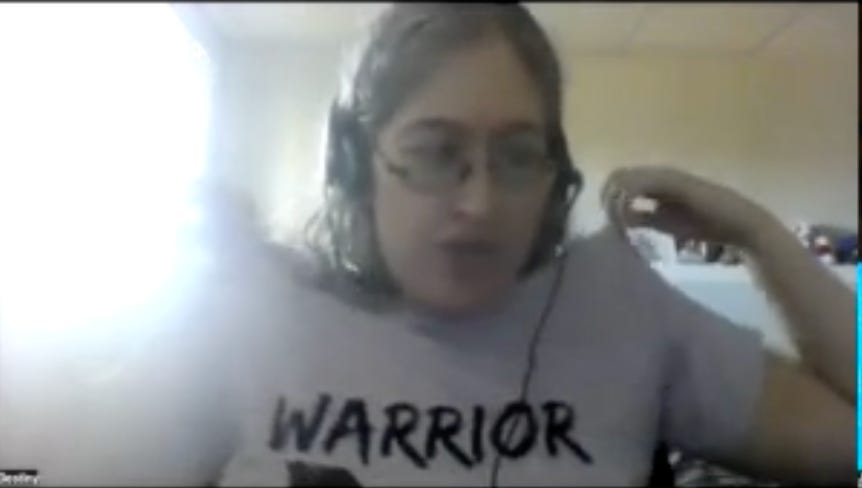
Destiny Aspen Mowadeng hated inspiration porn.
She detested being called “an inspiration” just because she showed up for life despite never being able to walk due to congenital birth defects, most significantly spina bifida. In writing this piece in the week after her death to reflect upon our connection, I pause to consider all that Destiny was to me. Because I dare not call her an inspiration! At times, our relationship was challenging, especially when she put me up on a pedestal and thought more highly of me than I deserved. I had to tell her many times over that I would let her down one way or another, as any human teacher or leader is bound to do.
Destiny came into my life in 2018 after hearing me give an interview as part of an online summit. Destiny had just completed a trauma coaching certification and was gathering all of the information that she could about trauma recovery. My work around Dancing Mindfulness fascinated her, and she had a keen interest in how to make it even more adaptable and accessible for wheelchair users. Destiny quickly connected with our online community and completed the facilitator training certification remotely in 2022 with one of our affiliate faculty members.
One of the first major lessons that Destiny imparted to me was that online community was real, valid, and essential. It’s interesting that I never had the chance to meet, in-person, someone with whom I became so close. Yet for Destiny, who lived in not-so-easy-to-get-to Newfoundland, online connections were a quite normal and natural lifeline. One of her last Facebook posts before her untimely death from cancer at the age of 44 reads: “Chronically ill and disabled people spend more time online due to their very limited social lives outside their homes. Remember your 2020 online habits when we were all stuck at home? That’s our norm and we don’t need your judgment.”
Even though Destiny considered me to be a teacher and a mentor, she was one of my greatest teachers. She so generously shared her lived experience with me and many others about things we might never even consider as able-bodied or even somewhat able-bodied people. In August of 2022 Destiny offered a course with my company, the Institute for Creative Mindfulness, called “The Dark Side of Disability.” She recognized that the title sounded harsh and maybe even a bit jarring. She wanted that. Because of her frustration with “inspiration porn” about disabled bodies, she fiercely desired to paint a picture for clinical professionals of what it was really like to live as she did: rarely able to leave the house, dependent on caretakers, and yet still full of wonder and curiosity about the world and the people in it.
Yet I believe her biggest role as an educator for me and for the people who follow my work was through her lived experience contributions for the Dissociation Made Simple project. When I put out the call for interviews in early 2021, Destiny said that she sat with the invitation for a few weeks and the desire to talk to me for the project just would not go away. Although I hadn’t known Destiny to identify specifically as “plural” or “multiple,” she knew that she had a great deal to share from her perspective as a complex PTSD survivor who was just getting to know her parts. And her perspective as someone who spent her entire life in a wheelchair offered readers an invaluable level of insight. In the book, Destiny explains that because she was not able to get out of situations physically when she was a child without caretakers, many of whom abused her, dissociation at least allowed her to escape mentally. She defined dissociation as a disconnect that allows her to feel safe in the world; even if this means that she is sometimes looking at the world as if through a bubble.
She dropped quite a few truth bombs in Dissociation Made Simple that have stayed with me in the five years since I interviewed her, truth bombs that I regularly incorporate into my teaching. One was her repulsion to the word “grounding.” A popular term used throughout psychotherapy, especially in the trauma and dissociation movement, for Destiny, the term was an activator. It just reminded her that she was permanently grounded due to her disability, and no amount of therapyspeak or clinical justifications could move her past the traumatic connotation of the word as a punishment. In discussing that she found some of the concepts around developing present moment awareness useful, for her, calling them “anchoring” made much more sense. This insight reminds me, and I carry this forward, that we must always yield to the people we serve in the language that we use. And that modifications are essential, even if it means challenging the words and concepts that we as therapists most hold dear.
Another traumaspeak phrase that she abhorred was the body keeps the score, made popular by Dr. Bessel van der Kolk’s book of the same name. For Destiny, trauma was more than the physical body and more than science. Destiny said plainly, “I’m science’s fucked up failure. I’m the thing they tried to fix and couldn’t. And I resent the idea put out there that it’s some kind of game.” Destiny, in an opinion that she realizes is unpopular with many trauma therapists, picked up on a quality of eugenics in the modern trauma movement in that it seems so focused on fixing the defect and not accepting people as they are.
Destiny was a fierce advocate for the social model of disability as opposed to the medical model of disability. She said, ““The world external to us and its barriers are what create our disabilities not our physical bodies; versus the medical model that sees us as entirely one-dimensional diagnoses.” One of the most precious things that Destiny ever made for me was a meme, quoting something that I said on a podcast at one point: “We’ve pushed the science so hard the soul has been missing.”
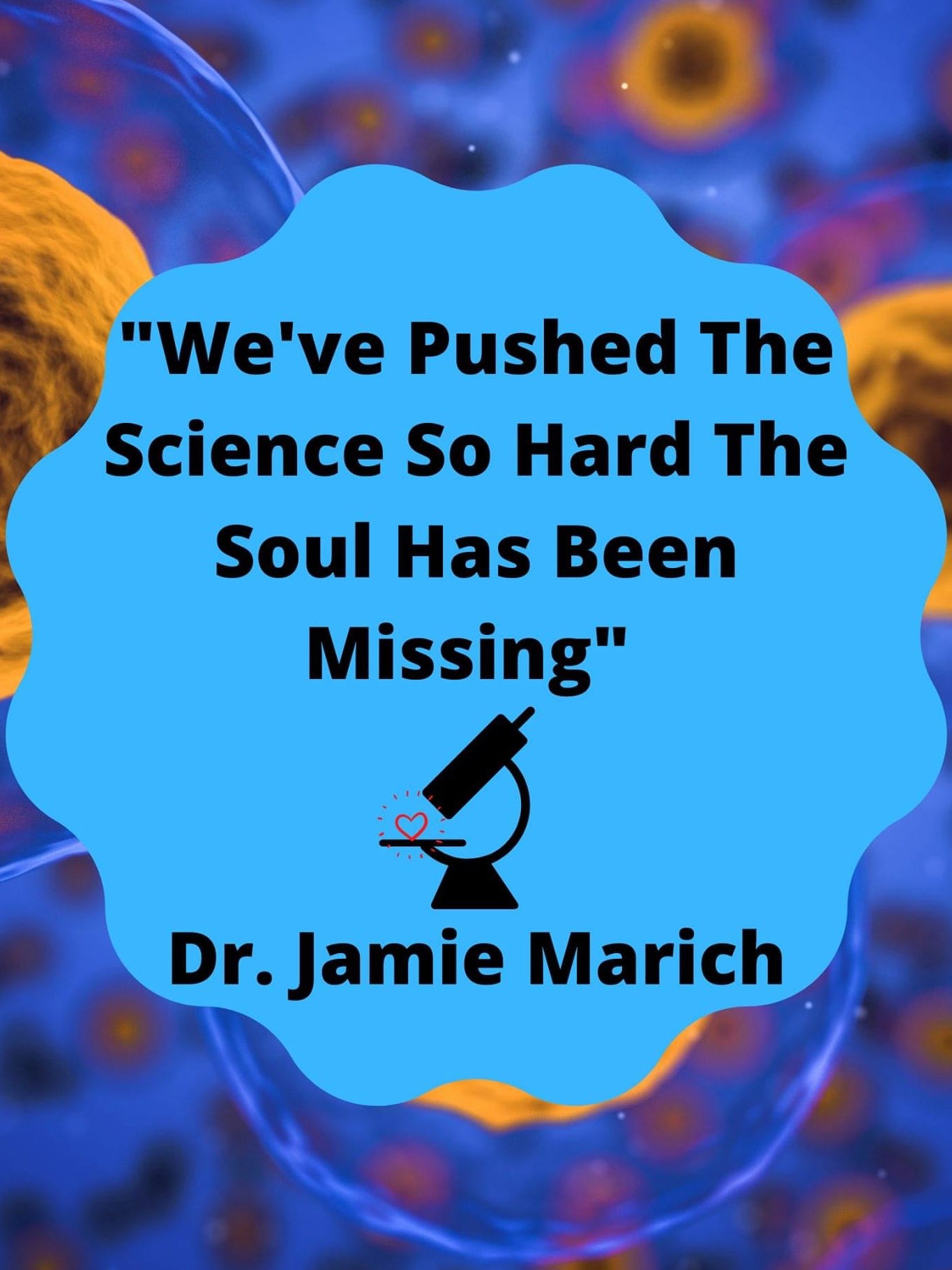
Destiny and I forged a strong bond over that idea. When I announced that I would be moving away from such direct involvement in EMDR Therapy (which she despised) and the trauma therapy movement in order to study chaplaincy, Destiny emerged as one of my strongest supporters. She encouraged any efforts that I or anyone else put out into the world to embrace people as they are and not just see them as diagnoses. And to see the beauty in the dance that each person put out into the world.
During her funeral on June 2, which I was able (at her request) to officiate virtually for her online friends and community, we shared this prayer from the Cherokee tradition that meant so much to her. She requested that it be read at her funeral service and in it I find the words that defined her precious life.
To dance is to pray,
to pray is to heal,
to heal is to give,
to give is to live,
to live is to dance.
Thank you, my dear teacher, for reminding me–for reminding all us– of these truths.
Destiny was your chosen name. Your name will forever remind me that it was destiny that you came into my life and the lives of so many others in the Dancing Mindfulness and the plural communities. May we continue to honor your legacy and lead with the dance.
If you would like to formally donate to Destiny Aspen Mowandeng’s funeral fund, click HERE.
Donations in any amount will get you complimentary access to her work, “The Dark Side of Disability.”
We are still trying to raise the last few hundred dollars to get her a headstone. Thanks to those of you who donated already, we were able to cover her burial and the related fees.